
If you’ve been discussing using more AI tools in your organization, you’re not alone. Nearly 35% of companies are already using AI and about half of the remaining companies plan to incorporate AI technology in 2025.
However, relying on AI tools that haven’t been trained on your company data can only take you so far. Using popular, free tools like ChatGPT can be effective for standard communication or idea generation, but they don’t know your industry in-depth. They have been trained with publicly available data that knows a little about a lot of topics. It doesn’t know about your business.
That’s why you should invest in your own AI tools and then train it on your unique company data. A well-trained AI tool can do next-level work like reliable forecasting, assisting customers via chatbots, and unique content generation.
 To be successful, you will need to digitize and centralize all your data and documents. And we mean all of it. This isn’t just invoices from the last five years that you’ve been paying electronically—it’s also historical records on paper or on microfilm; it’s internal training videos and guides; it’s onboarding paperwork. Essentially, you need all your company data whether it’s stored electronically in a system or sitting in physical formats in a file room.
A recent study revealed that 46% of the respondents have crucial company data on paper documents. That means that half are not ready to train AI models for their business, despite indicating that they would like to. You simply cannot leverage your data if it’s not digital.
Below, we’ll outline some of the key reasons why you need to digitize your organizational data so you can unleash the full power of your AI tools.
1. Unique Data for Unique Solutions
As mentioned above, AI tools that you have likely heard about and used (ChatGPT, Claude, Bard, etc.) have all been trained on widely available data. This might be fine for getting a snapshot of your industry as whole, but public data like that simply cannot train an AI model to learn the patterns and insights of your organization.
Even if AI tools had access to more industry-specific data, that doesn’t mean it’s the best tool to use. But feeding your AI your own organizational data will allow it to fully understand your business. Additionally, training models on your own data allow you to focus on your company’s individual goals and make recommendations based on those. Whatever you want to learn, know, or predict about your organization needs to come from your organizational data.
2. Better Market Understanding
 Since popular AI tools have been trained on publicly available data, they don’t have any deep understanding about your industry. Why? Because all the data that really knows and influences your niche market is kept confidential. Popular AI tools may be able to generate ideas of splashy social media campaigns, but is your target market even using those social media accounts?
Training your own AI tools with your business data can assist in uncovering insights and discovering opportunities that just wouldn’t be possible with public AI tools. Using your own data will eliminate irrelevant customer personas and allow your tool to focus on the customer segment that you actually serve.
When you train AI with your industry knowledge, customer data, and more, it can help you discover potential for new products and services. For example: maybe you have a high-value product with a low overhead cost that you don’t sell often. AI may be able to identify better opportunities for you to sell this product.
By having a full understanding of your target market and ideal customer base, your AI tools can assist with strategic decision making, marketing campaigns, customer engagement programs, and more.
Additionally, without irrelevant data. your AI tool will perform better and with higher accuracy. It can learn off your business data and deliver suggestions that are much more targeted and useful.
3. Data Privacy and Security
 If you use some of those free and popular AI tools, you need to be careful of the data you share as they are hosted and owned by other companies. For example, if you use the free version of ChatGPT to perform tasks, that data will be used to further train ChatGPT unless you purposefully opt-out.
This is just another important reason to invest and train your own AI models. By doing so, you have complete control over your data and your tools. You don’t have to worry about sharing confidential or proprietary information with third parties. It’s your AI tool learning off your data.
You also have the additional benefit of added security on your business data outside of your AI models. With digital data (and the right software) you can restrict access, assign temporary permissions, or even redact sensitive information. This way, only the people who need to see documents or data ever do.
4. Significant Cost Savings
We often talk about how digitizing your data can save your business money. The costs associated with printing and storing paper files add up quickly. Converting your physical media into electronic data lessens or even eliminates those costs.
Working with digital data also allows your employees to be more efficient. Your employees can serve customers faster by quickly pulling up requested information. You can automate paper-based processes to increase turnaround time and eliminate lost files.
But beyond those initial savings, an AI model trained on your company data can help identify current inefficiencies and reveal cost-saving opportunities. Perhaps you could process invoices faster to take advantage of discounts. Or maybe there’s a certain product that isn’t performing well anymore that should be dropped from your portfolio. Some of these things can be harder to pinpoint in day-to-day operations, but AI can look at your historical data and tell you empirically if something can be improved.
If you’re planning to implement AI this year, we highly suggest taking a look at the study linked at the beginning of this post. It’s incredibly thorough in covering what you should be concerned about, planning for, and thinking about when it comes to training AI models on your data.
And if you still have critical company information on paper, microfilm, or other physical media, we’d love to help you get it digitized and ready for training your AI tools. Contact us or give us a call at (630) 321-0601!
Questions or comments on this article? Find us on LinkedIn or Twitter/X.
Disclaimer: the first two pictures on this post were generated with AI.
6672
publish
2024-12-10 12:00:05
train-ai-models-digital-data

 Do a deep dive into the software you currently use to see if there are features you’re not taking advantage of or could be added for a small fee. Workflow automation and
  Last, but certainly not least, our customers want to put an emphasis on choosing leading
  Before you do anything with software, hardware, or processes, you really need to decide what your file and
  E-forms
 These systems are specifically designed to store, find, and move information. A
  One of the things that we hear frequently is that companies don’t want to change systems. And because they don’t want to change systems, they’re still doing a lot of their work on paper.
 FADGI is a government effort to move entirely to digital record keeping. As government records need to last forever, the movement specifically focuses on quality guidelines that need to be met when submitting media, documents, pictures, movies, etc.

 If you are currently outsourcing, contact your scanning partner and make sure that they are aware of the criteria for submissions. This should’ve been established during the beginning of the project, but it never hurts to quickly touch base and review.
 Today, you likely search your document repository via clicking into the project or folder you want to view. Or, if everything in your document repository is text-searchable, you can search by keyword or phrase.
 Instead having to manually file a document in your repository and filling in all of the metadata fields, AI can
  Circle of Excellence members are selected from Digitech Systems’ Value-added Reseller (VAR) community. The selection process recognizes VARs who are growing their business as they resell
 The first step, if you haven’t done so already, is to
 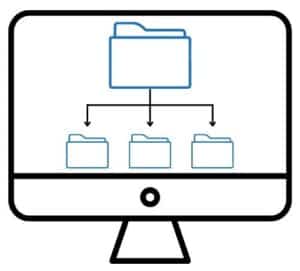 Once your files are digital (or if they already are), you need to create the highest level of your organizational structure. Every system has a different name for their organizational structure, such as folder or project. For this blog post we’ll stick with “folder,” but know that your system may refer to it differently.
 If you look at the various files on your computer or server, is there any rhyme or reason to how they are named? If you have a strict naming convention and stick to it every single time you create a document, then you can skip to the next step. But if you don’t, keep reading.
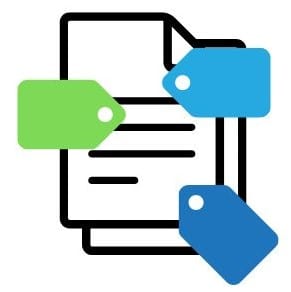 Tags are yet another way to sort and categorize your information. Tags are a great supplement to indexing. Not every content management system has tag functionality, but if yours does, you should definitely take advantage of it.
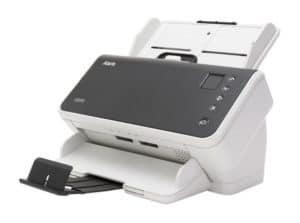 1. KODAK S2070: Up to 7,000 pages per day; 3-year warranty
 2. KODAK S2050: Up to 5,000 pages per day; 3-year warranty
 3. Epson DS-530: Up to 4,000 pages per day; 3-year warranty
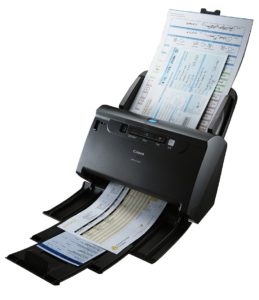 4. Canon DR-C240: Up to 4,000 pages per day; 1-year warranty
 5. KODAK E1040: Up to 5,000 pages per day; 3-year warranty
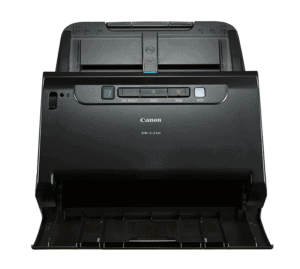 6. Canon DR-C230: Up to 3,500 pages per day; 3-year warranty
 7. Epson DS-410: Up to 3,000 pages per day; 3-year warranty
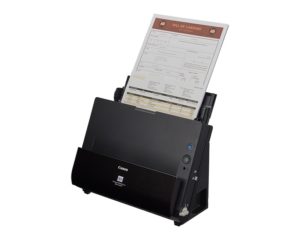 8. Canon DR-C225 II: Up to 1,500 pages per day; 1-year warranty
 With employees working from home either full-time or with a hybrid schedule, it’s far more difficult to get them the mail they need in a timely manner. Envelopes could sit on desks for days (or weeks). Checks could go missing if not processed immediately.
 How many times have you gone looking for a piece of mail just for it to not be there? Unfortunately, lost mail and misfiling are still common problems.
 When you handle your mail internally, what’s to stop someone from picking up a letter from another person’s desk? Even with a clean desk policy, employees may not immediately file away information or secure letters in their desk before getting up.